Showing posts with label writing craft. Show all posts

Tuesday, July 13, 2010

Do They Sweat in Duke City? / Fiction as Research by Stephen Bly

Today I welcome a guest poster, Stephen Bly.

Steve has authored over 100 books and hundreds of articles. His book, The Long Trail Home, won the 2002 Christy Award for excellence in Christian fiction in the category western novel. Three other books, Picture Rock, The Outlaw's Twin Sister, and Last of the Texas Camp were Christy Award finalists. Steve is a speaker, pastor, past mayor, dad, and wife to Janet--who is also a writer. He's a third-generation westerner who spent his early years working family ranches and farms in central California. He now lives in the mountains of north-central Idaho and in his spare time collects antique Winchesters.. He also works on the construction of Broken Arrow Crossing, a false front western village near his home. And he's seldom seen without cowboy boots, hat, and jeans.

Read more about him at his website here.

And stay tuned for a One-Word/One-Line interview with a giveaway of an autographed copy of Cowboy for a Rainy Afternoon.

Thanks, Steve, for visiting The Write Pursuit today and sharing a little about western novel research, especially as relates to your newest book.

Do They Sweat in Duke City? / Fiction as Research by Stephen Bly


New Mexico heat blanketed Albuquerque that July like too many covers in a stuffy cabin  . . . the kind of day that you sweat from the inside out and feel sticky dirt in places that you don't ponder too much except in the shower.
From Cowboy for a Rainy Afternoon
Released June 2010

Every novel's got a place and time. That often means plenty of research. My next release, Cowboy for a Rainy Afternoon, is set in Albuquerque, New Mexico, 1954. So I needed to know some things about a specific city, a state, and what the world was like that year.


Research Thru Travel

It's tough, dirty work . . . but I love any time I can go to New Mexico. The only other site I've been that boasts similar layers of culture stacked one upon another: Rome. Yet, New Mexico's still a cowboy state. From the Pecos River in the east to the Plains of San Agustin in the west, from the Sangre de Christo range in the north, to the "bootheel" in the south, it's full of great ranching country. A perfect setting for a cowboy story.

My wife, Janet, and I drove up and down Historic Route 66 that runs through Albuquerque. It was known as the "Main Street of America" or the "Mother Road." It was the primary route for those leaving the dust bowl of Oklahoma and moving to California during the Great Depression. Albuquerque was selected as a stop on the first transcontinental air route in the 1920s, and Route 66 brought the first transcontinental motorists through the city.


Research Thru Study

Duke City is a nickname for Albuquerque because it was named after the Viceroy Francisco Fernandez de la Cueva, the Duke of Alburquerque. Later the spelling was changed because some influential person couldn't pronounce the "R" in Alburquerque.

The cowboys in my story retire in Albuquerque, not Santa Fe, because even in 1954 the latter was becoming the artsy, celebrity spot it is today. These guys needed a cheap hotel and city amenities. So Albuquerque suited them fine. Before there were retirement communities and senior citizen housing, some elderly lived in old downtown hotels. Well past their prime in attracting overnight guests, they catered to senior citizens who scraped by on something fairly new in the fifties: Social Security.

One of my favorite governors hails from New Mexico. Governor Lew Wallace authored the novel Ben-Hur (a movie made in 1959, starring Charleton Heston), and he also tried to negotiate with the notorious Billy the Kid. What an eclectic group of folks tramped the Old West.

A piece of historical tidbit . . . a hard thing for some readers to realize: in 1954 no one considered cigars or cigarettes or their second-hand smoke in any way harmful. That's why you see so many actors and actresses lighting up in the movies of that period. Cowboys often carried peppermints, which were tasty, portable, and covered up the smell of such vices, at least so they thought.

Research Thru Learning the Language

The main challenge of fiction: the rhythm of dialogue. I had to sit very still and listen to each character speak in order to get the timing right, along with the vocabulary.

Every era boasts its own unique language. Every region develops a dialect. For the writer, both can be learned through research and careful study. But tone, timing, and cadence can't easily be taught. It's better to be in your bones. A writer's challenge is to develop instinct for tune as well as lyrics of speech. There has to be a natural flow.

To know the right lingo steps up a novel's authenticity. In Cowboy for a Rainy Afternoon I got to use a lot of the classic cowboy terms that got lost over the years. I tried to stick an interior explanation to explain a few that might confuse.

For instance, a McGee is cowboy slang for a 4-strand rope made of a maguey (century) plant.

A phrase often used on a cattle drive or roundup was "man at the pot." That meant someone was at the coffee pot for a refill and that shout-out indicated the guy was to fill everyone's cup.

To old cowboys, "nobby" signified fine, expensive boots.

Pop/Grandpa would "do to ride the river with." That's the ultimate compliment for a cowboy. Crossing wild rivers with great herds of cattle exposed dangers for man and beast. Not a time to trust your safety to some rookie just learning the ropes.

"You never know the luck of a lousy calf" . . . one of my favorite cowboy sayings. Big, healthy, sturdy calves seem to fall off cliffs or get attacked by wolves. It's the scrawny, worthless ones that live forever.

I've often wondered why we stopped using colorful words like "footpad." So called because of guys who pulled off their boots and snuck around in stocking feet so no one would hear them.

Research Thru Memories

In 1954 an old man's vision of feminine loveliness would be Bow, Grable, Monroe, or Kelly. Grace Kelly in High Noon stole my own ten-year-old heart. However, I figured she wasn't too smart because she couldn't understand why Will Cane had to turn back. But I did. Shoot, that's in a cowboy's bones. But, my oh my, she surely was purdy.

My bedroom was stacked with White Owl cigar boxes, my granddad's favorite cigar. He didn't smoke them much; mainly he chewed them. And because I lived across the road from him, I got many of his boxes. Lots of childhood treasures can be stored in a cigar box.

I listened to Sergeant Preston on the radio. What memories. How I wanted to be a mountie and own a dog like King.

TV was a brand new technology in 1954. We hadn't learned to sit comatose in front of one . . . yet.

One of the advantages of modern autos . . . they run so smooth there's seldom a backfire. But those random air-shattering blasts from the old rigs added adventure to an otherwise ordinary, routine day. Me and my young pals surmised the sound as a gun blast from a bank robber making his get-away, even though my hometown had no bank. That fact didn't darken my vivid ten-year-old imagination.

The summer of 1954, in Albuquerque, a ten-year-old boy becomes a Cowboy for a Rainy Afternoon.

Maybe I wasn't born 100 years too late.

Copyright©2010 by Stephen Bly


Find Steve at his website.
Enjoy his new blog.
Follow him on Twitter.

Cowboy for a Rainy Afternoon is available on Amazon or from his website's bookstore.

Wednesday, June 9, 2010

Gracee--Gold Star Young Author

Some months back, I shared some of my granddaughter's writing tips. She revised her work at school. I thought you might like to see the final product--in her own words with phonetic spelling. 


Coming up: A one-word/one-line interview with this young author. 

P.S. Gracee's mom did have an infection in an ear, and her ear did "swallow" an earring back, but her ear lobe is still intact! And her birthday is in October. She just liked turquoise better!

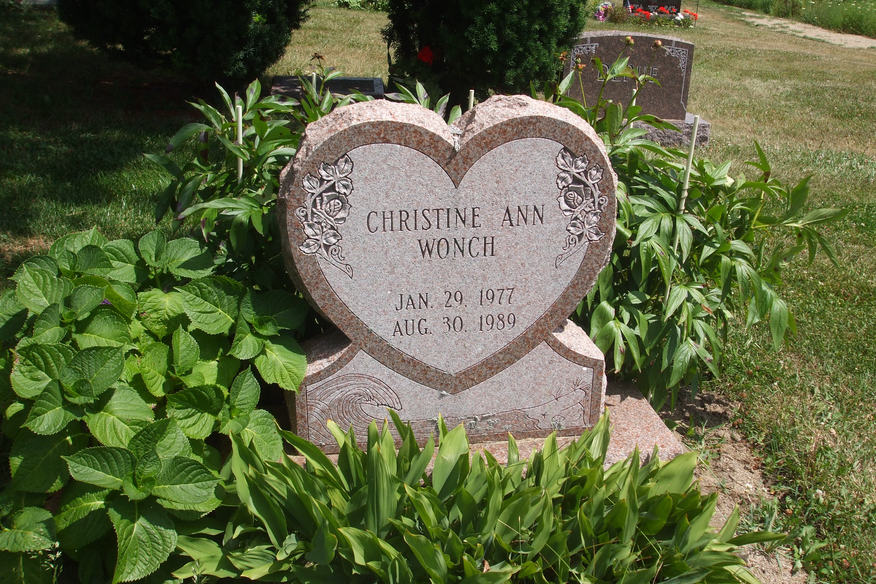
Note: The Christine Wonch Creative Writing Award program was formed to honor a young girl who was killed in a car-pedestrian accident. The program is in its 20th year and provides an opportunity for area students to have their best work evaluated. They begin working on their stories in the fall.


Copyright © 2010 by Sandra Heska King

Wednesday, May 26, 2010

Need to Build a Plot?

"There are only two or three human stories, and they go on repeating themselves as fiercely as if they had never happened before." ~Willa Cather

I can't tell you how to build a plot, but these authors can and do.

I've got so much to learn!

Seems like everyone knows about Plot & Structure by James Scott Bell and Writing the Breakout Novel (and corresponding workbook) by Donald Maas.

I heart them.

But I also found 20 Master Plots (And How to Build Them) by Ronald B. Tobias buried on my shelf. And it makes more sense to me now than it did when I bought it over 20 years ago.

He states, "The best place to start a discussion about plots is to trace their bloodlines to the beginning . . . the two basic plots from which all other plots flow (that) are still the foundation of all literature. If you understand the essence of your plot, you will understand better how to go about writing it."

He goes on, "In Dante's Inferno there are only two basic sins in all the levels of hell. One is called forza, crimes of violence and force. The other basic sin is called forda, which is Italian for fraud."

Force or fraud

"Dante understood human character. These two sins come from two basic functions of human beings. Force is power, strength, physicality. Fraud comes from wit, cleverness, mentality. The Body and The Mind"

Body or mind.

When we have a story idea, we need to decide if it can be told more in terms of action or more in terms of the inner workings of character and human nature.

Doing or being.

The action plot is a puzzle plot where some kind of mystery needs to be solved. The mind plot is an idea plot where the characters almost always search for some kind of meaning.

Mystery or meaning.

If the story is plot driven, the mechanism is more important than the specific characters. The characters make the plot happen.

If the story is character driven, the mechanism is less important than the specific characters. The plot helps the characters find meaning.

Character driven or plot driven.

You decide the focus. Then you find some balance.

Tobias describes 20 basic plots (you can see them in the Amazon book preview.) He provides checklists at the end of each chapter.

He also provides a final checklist at the end of the book, questions you can ask yourself as you develop your plot.

"If you can answer all of them, you have a grasp of what your story is about. But if you can't answer any of them, you still don't know what your story is and what you want to do with it."

I'm so glad for good teachers.

I'm heading out to my porch now with a big glass of iced herb tea to rock and read.

Copyright © 2010 by Sandra Heska King

Saturday, April 10, 2010

Writers in the Spirit

Writers in the Spirit: Inspiration for Christian Writers
by Carol J. Rottman, Ph.D.
FaithWalk Publishing 2004

I brought this book home from the local library. But my left arm had to hold my right arm down to keep from writing in it.

So I  bought my own copy.

Eleven chapters burst with inspiration in the form of essays, meditations, scripture references, quotes, tips, writing challenges and prayers. Designed to provide motivation and encouragement.

Some quotes from Carol:

"'Incarnate' is a better word for what artists do than 'create.' They make something out of other somethings; they are the great recyclers of this world."

"Two things help me get unstuck when the writing stalls: Taking a power nap (putting my head on my folded arms at the desk until they tingle) or taking a walk . . . Two things don't help: eating and fretting."

Note: That's the only way I can nap. Else I'm done for. And I guess I need to take the M&M's off the desk.

"More of us are writing, but most are not writing very well."

"Dear God, I praise you for putting desire in my heart to try what seems impossible. When I am weary and faint--inspire me again. Amen."

"The task of a writer is to soak up dibs and dabs of this and that, swish them around in the mind, and slowly release words or marks in a thin stream across a page."

"The breakthrough came when I finally moved aside and asked God to break into every part of my life and work."

"There are days when I seriously wonder if I should be a writer."

"I will starve if reading, writing, and prayer are not everyday meals."

"Really, Lindsey Jo, I'm sixty years old and have just begun to express myself through writing."

"Throw yourself into writing about something you love, or fear, or loathe--and feel the fervor."

"As with blood delivered right into the vein, words can fix a system gone awry. Words beget thoughts like plasma generates new blood cells."

"Merely thinking about writing will not produce a single word. Endless speculation may actually block writing instead of promoting."

"Perhaps a great, great grandchild will, someday, find my words and know me."

"Recently I was reminded that St. Paul would never have written the letters to the churches if he had not bee incarcerated and unable to preach."

" . . . circle all words that pad or puff up your writing and delete them."

"A writer must work out of what is--not from ideal circumstances."

Some quotes from others:

" . . . I suspect that maybe God speaks to us most clearly through his silence, his absence, so that we know him best through our missing him." ~Frederick Buechner

"You must lurk in libraries and climb the stacks like ladders to sniff books like perfumes and wear books like hats upon your crazy heads." ~Ray Bradbury

"This is what we speak, not in words taught us by human wisdom but in words taught by the Spirit, expressing spiritual truths in spiritual words." 1 Corinthians 2:13

Yep. Some good stuff in here.

Copyright © 2010 by Sandra Heska King 

Wednesday, April 7, 2010

Four Pitfalls of Christian Writing


I dig Philip Yancey. Anything he writes. I even got to meet him in person once. He's not afraid to tackle hard stuff, and his writing inspires me to pursue excellence.

And so I often pull his books off my shelf. Like Open Windows, a book he wrote over 20 years ago in which he addressed the importance of writing with art and excellence. I think it's still relevant today.

He says that Christian writers must strive for high literary standards in order to be taken seriously.

I believe that. We should stretch high and higher in our art because we represent The Highest Master of art and creativity and excellence.

Yancy describes four pitfalls of Christian writing.

1. Thought Without Art. 

He urges us to not write stuff that sounds like a sermon. Writers "must take readers on an emotional journey to hold their attention." He reminds speakers they can't necessarily captivate an audience with the written word like they can in person. As authors, they have to get more creative.

Examples to study: Frederick Buechner, C.S. Lewis, Dorothy Sayers, George MacDonald, G.K. Chesterton.

2. Supernature Without Nature.

Yancy says we should explore the magnificence of God's natural creation, affirm it and "plumb its meaning" before leading people on to a supernatural world. He believes readers hunger for this and says we need "a more supernatural awareness of the natural world and a deeper natural sensitivity to the supernatural world. In our art the two must come together, and fuse."

Examples to study: Annie Dillard, Tolstoy, Lewis Thomas, Pablo Neruda.

3. Action Without Tension.

He says that sometimes when he reads Christian books, especially fiction and biography, he feels like the characters are "strangely lobotomized." Read Jeremiah and Hosea and see how graphically the prophets described Israel as a harlot. Old Testament Jews felt words like atonement and forgiveness because they watched a priest swipe a knife "across the spurting artery of a fear-stiffened lamb." We have to infuse emotion and word pictures in our writing.

Examples to study: James Dickey, John Updike, William Faulkner, Frederick Buechner (Leo Bebb).

4. Light Without Darkness.

We can't forget that many readers are traveling in the dark, so we can't turn on the floodlights without blinding them. We have to bring them gradually through the tunnel. "We have to allow the reader to understand lack of faith as well as faith . . . Insanity must sound like insanity. Doubt must sound like true doubt."

Examples to study: William Faulker (The Sound and the Fury), Ken Kelsey (One Flew Over the Cuckoo's Nest), Dostoyevsky (Brothers Karamazov).

Yancey  reminds us that the Bible is filled with "rollicking" love stories, drama, history, poetry, and parables.

And he ends the chapter by stating that C.S. Lewis once likened his role as a Christian writer to an adjective humbly striving to point others to the Noun of truth.

"For people to believe that Noun," Yancy says, "we Christian writers must improve our adjectives."

Excuse me.

I have some reading to do and some adjectives to work on.

Copyright © 2010 by Sandra Heska King

Monday, March 8, 2010

Wordless Recreation for Writers

"Too much reading is very bad indeed."

Yep, you read that right.

That's what Dorothea Brande said in her classic book, Becoming a Writer.

Say what?

She says writers tend to take too many "busmen's holidays." In other words, they tend to spend their "off time" doing writing-related activities (such as reading or talking shop), like a bus driver who takes a bus tour for a vacation.

And how many of us tether ourselves to computers and cell phones on "vacations," unable to totally relax?

How many of us are addicted to multitasking?

We all seem to have a little trouble in the relaxation department or chilling in a ring of silence.

"A certain amount of shop talk is valuable; too much of it is a drain. And too much reading is very bad indeed."

Too much reading? How can that be?

Ms. Brande says all of us, writers or not, are so used to words we can't escape them.

And she wrote this book in 1934!

If we starve ourselves long enough in a wordless void, we'll eventually start talking to ourselves. We'll start feeding ourselves words.

We can test it by spending some time alone. Resist books, papers, magazines, and the telephone. Turn off the TV. Shut down the computer.

When one is "sentenced to silence," words and ideas clamor for attention.

If you want to stimulate yourself into writing, Ms. Brande says, amuse yourself in wordless ways.

And don't be in a hurry to reengage.

Before long you'll find that "words have rushed in to fill the wordless vaccum."

She talked of one friend who used to lie out in the back garden and stare at the sky--until some family member came to join him for a chat.

"Sooner or later, he himself would begin to talk about the work he had in mind, and, to his astonishment, he discovered that the urgent desire to write the story disappeared as soon as he had got it thoroughly talked out."

So then he disappeared to a park bench every day and stared at pigeons for two hours.

Taking two full hours every day might be too stressful for most of us, but for a least a little while every day we could pursue wordlessness.
  • Listen to a symphony orchestra or sound tracks or "spa" music.
  • Take a long walk.
  • Ride a horse or a bike.
  • Play some solitaire (or Bejeweled Blitz!)
  • Do some kind of needlework or craft.
  • Whittle.
  • Fish.
  • Watch clouds. 
  • Noodle on a harp (!) or other instrument.
  • Sort some pictures.
  • Take a long bath or shower.
  • Swim.
  • Sit on a beach or a dock.
  • Color a picture.
  • Paddle a boat.
  • Rock in a chair or seek out a swing.
  • Throw pebbles in a lake.
  • Plant some flowers, weed, mow the grass.
  • Wash windows, fold clothes, scrub floors, or paint walls. (Come do mine. I'll be quiet.)
Rhythmic activity. Monotonous activity.
    Alone. Wordless. 

    She says books, theaters, and "talking pictures" (I suppose that means movies and TV today) should be very rarely indulged in when you have any piece of writing to finish.

    " . . . it is to be noticed that successful writers, when talking about themselves as writers, say little about curling up in a corner with a good book. Much as they may love reading (and all authors would rather read than eat), they had all learned from long experience that it is the wordless occupation which sets their own minds busily at work."

    To put it another way, we need to spend more time pursuing wordlessness so words can pursue us! 

    "Too much reading is very bad indeed."

    How are you at spending "quiet time.?" 
    What wordless recreation stimulates words and ideas for you?

    Copyright © 2010 by Sandra Heska King

    Tuesday, February 16, 2010

    Forensics & Faith: Five Reasons Why the Unpublished Can Stop Writing

    "Has life and disappointment caused you to shove your writing aside? Enjoy your time off. It's all part of your journey."

    "The real writers always return to writing."

    Having set my writing aside for so many years, I dig this post by Brandilyn Collins!

    Forensics & Faith: Five Reasons Why the Unpublished Can Stop Writing

    Wednesday, January 27, 2010

    The Arkeology of Writing

    I've been thinking about Noah's ark and writing.


    A handful of characters shut into a setting and set asea. A few conflicts tossed in to stir up noise and smell up the place. A window for the reader to observe the action. And finally, the story comes to rest. The author opens the door and lets the characters out, maybe to eventually be shut up in another setting.

    Noah built the ark in three levels. As I study this fiction thing, I see that authors often build in threes.
    • Setup, Confrontation, Resolution.
    • Theme, Plot, Growth.
    • Development, Plot, Pace.
    • Beginning, Middle, End.
    • Rising Action, Reversals, Recognition.
    • Complication, Conflict, Climax.
    • Characters, Plot, Dialogue.
    • Story, Substance, Structure.
    • Three-Dimensional Characters.


    I've also been thinking about character arc--how a character grows during a story, either changes or realizes affirmation. Kind of reminds me of a rainbow. Like Noah, minding his own business, doing whatever Noah did until he got "the call." Challenge and conflict set in motion. A life storm. Rising tension. And then the bright colors of resolution and promise at the end of the storm.

    And in my study, I found this article and inspiring video on Steadfast Main Characters.

    Can you think of any analogies between writing and Noah's ark?

    Copyright © 2009 by Sandra Heska King

    Thursday, January 21, 2010

    Arc? What's an Arc?

    Snady was in her office, typing away, creating a few posts for her blog there. She was a good devotional writer.

    Clickity-clack. Clickity-clack. Clickity-clack.

    DING!

    Snady!

    Somebody call?

    Clickity-clack. Clickity-clack. Clickity-clack.

    DING!

    Snady!

    Who is that?

    It's the Lord--Snady.

    Right. Where are ya? Whaddya want? I been good. Sorta.

    I want you. to build. an arc.

    A boat? You want me to build a boat? But that's already been done.

    No. I want you to build an a-r-c.

    Right. What's an a-r-c?

    Look it up.

    Flip, flip, flip.

    The dictionary says an "arc" is a curve forming part of a circle, like a bow. 

    Umm . . .You want me to build a bow?

    Been there. Done that. (Genesis 9:13-16)
     
    Look a little further.

    Google. Google. Google. 

    Here's something called a "character arc" and a drawing that looks like the St. Louis Arch and . . . 

    Uh oh. Wait a minute. Lord, this is starting to sound like fiction. You don't want me to write (gulp) fiction. Umm . . . do you?

     
    Bingo! I want you to build a story, some stories. It won't be easy, but you're too comfortable where you are. It'll be an uphill climb, a wild ride, and you'll struggle. A lot. But you will grow in the process. And one day you'll be comfortable again.

    Trust me. Still.

    GULP! Again.

    Study, study, study.

    Hmm. This character arc stuff seems kind of important. Next time I'll share some things I discovered.

    In the meantime, enjoy this Bill Cosby video.


    Question: Are you too comfortable where you are right now?

    Copyright © 2009 by Sandra Heska King